Since you will be entertaining guests at home, it’s important to have ample space in the living area. Consider rearranging your furniture following the parallel layout. Place two sofas across each other so you and your guests can interact. Balance the look of your space by placing the coffee table in the middle.
Since the foyer or entryway is the first thing that guests will see, make sure that it’s clean and organized. Prepare boxes and bins where they can leave their shoes. Have a special place for umbrellas as well. Don’t forget to add special touches like decor pieces. Add a potted plant or framed photographs to liven up the area.
Soothing fragrances help create a relaxing ambiance at home. Consider using natural fragrances like basil and chamomile as these are known to relieve anxiety, tension, and even insomnia. You may also place scented candles and essential oils in the bathroom or guest room.
Up the ante of their stay by preparing a caddy or tray with essentials that they would need. You may choose to add bottles of shampoo, soap, and lotion. Don’t forget to give them a set of towels as well.
If your guests are staying for a long time, make sure they have enough space where they can keep their clothes and things. Allot a closet and free up some cabinet space. You may also add a freestanding shelf where they can keep their other valuables.
Guest expectations are no longer confined to in-room amenities — they expand beyond to encompass a variety of services, activities, experiences, and all-inclusive packages. In this blog post, we take a look at over a dozen hotel revenue-generating ideas and explore how add-ons, services, and amenities can both improve the customer experience and boost your business.
First, let’s look at areas that can be expanded. When deciding how you’ll maximize your hotel revenue, consider a few things:
What makes your hotel unique?
What do you have to offer that no one else does? Is it your destination? Your particular location within your city? Architecture and design? Amenity offerings?
What are your most popular offerings?
What do guests love about staying at your hotel? Is it the service? The food and beverage? Your pool and spa?
Why would someone choose your hotel over others?
With these things in mind, you can chart your course for how to best augment your offerings to generate more hotel revenue.
Explore 17 hotel revenue-generating ideas to grow your business:
1. Host entertainment events at your property.
Work with local performers, entertainers, or musicians to bring them to your hotel for events on a regular basis. Invite local bands to play during happy hour in your hotel bar or restaurant, or host weekly concerts that showcase new musicians or the best local talent. Aloft does Live at Aloft Hotels – live, intimate performances from local and emerging artists. Aloft even organized a Homecoming Tour for eight hometown artists who traveled to various Aloft locations.
2. Cater to the needs of locals.
Convert your hotel into a community hub and everyday problem solver for locals. AccorHotels calls this concept augmented hospitality. Augmented hospitality means hotels provide everyday services to locals — other than lodging — that helps them in their lives. “It’s all about proximity, instant gratification, and the feeling of belonging to a community,” said Maud Bailly, chief digital officer of AccorHotels, in an interview with Skift. Your hotel is open 24/7, and you have staff on hand with local knowledge — leverage that, and offer it up to the community.
AccorLocal is AccorHotels’ way of connecting with the community. Through this program, hoteliers can choose which amenities they offer depending on local demand, and which local products they sell in their hotel depending on relationships with local vendors. As another example, Ace Hotels acts as a community hub by hosting nightly community activities in its bars and restaurants.
Think about what locals in your community need and provide it. Is it a community gathering place? Dry-cleaning services? Luggage storage? Access to amenities? Work with local businesses and offer their services to the community in your hotel outside of normal business operating hours.
3. Offer pet services.
Many people and families want to travel with their pets, so offering pet services and being a pet-friendly property has the potential to attract more business. The Kimpton Monaco Seattle offers doggie room service with a special menu for guests’ furry friends at an extra cost. Rosewood London has a luxury canine package, where both dogs and owners are treated to a VIP experience. It includes a dog bed, collar, leash, and coat designed by Barbour, and a one-hour grooming session. The package also includes organic dishes made for your dog at the hotel restaurant.
4. Offer hotel services to local rental properties.
Offer your hotel services like concierge, maintenance, access to hotel manager, housekeeping services, and use of pool, gym, and other hotel amenities to nearby rental properties. Bermondsey Square hotel in London offers housekeeping, maintenance, and luggage storage services to Airbnbs within a one-mile radius. Airbnb guests also have 24-hour access to the hotel manager for any support they might need.
5. Make your hotel kid-friendly.
Making your hotel kid-friendly isn’t just great for traveling families, it’s a way to engage with your local community, too, and provide the services they need. Have kids recreational activities like a pool with toys, week-long day camps in the summer, and offer childcare services to guests and locals. Some hotels offer supervised kids clubs, like Palace Resorts in Mexico and Beaches Resorts in Turks and Caicos. The Ritz-Carlton has a children’s education program, Ritz Kids, where kids can get their hands into nature and learn about the planet.
6. Rent out your amenities.
Your hotel amenities aren’t only of interest to your guests – locals who live nearby might want to partake, too. Consider offering monthly memberships to use your facilities, like the pool and the gym. Local community groups might need a gathering place for a weeknight meeting for a few hours – offer up short-term rentals of conference rooms for small local meetings or events. Opening up your parking spaces for monthly rentals or pay-by-the-hour could be another way to boost your hotel’s revenue. Or, set aside certain spaces or a certain level of your parking garage for public use, but make sure there are still enough spaces for all of your guests.
7. Rent rooms by the hour or for single-day use.
Especially now, offer to rent rooms during business hours for locals who don’t want to work from home, but can’t go into the office yet. It’s a good alternative to working from their home while still being remote and out of the office. And, that means a room that would normally sit empty can generate some extra revenue. Or, upsell existing guests with late check-out or early check-in. During the booking process, provide the option to arrive a little earlier or leave a little later for an extra fee.
8. Offer special discounts.
If a guest asks you or your in-room Alexa or Google Assistant about the pool or the restaurant, append special offers and discounts so they’re more likely to engage. Have Alexa or Google share promotions based on the weather or what hotel events are coming up. If it’s a nice day, advertise a discount for drinks by the pool. If the weather is poor, have Alexa suggest information about a spa treatment. Advertise weekend brunch specials on the Friday before. As CEO of Volara David Berger wrote for Hospitality Net, “Offering special ‘Alexa rates’ for bookings of voice-enabled rooms can increase ADR.”
9. Leverage custom F&B experiences.
People increasingly want experiences over material things. Rather than typical room service, upgrade your F&B dining experiences for those who are looking for a little something extra. Provide an in-room chef who will make the dish right in front of them, or a mixologist who will prepare drinks from the comfort of their own room. Personal cooking classes or demonstrations with the hotel restaurant chef could be a unique way to forge a personal connection with guests and give them an unforgettable experience. Or, create a special package with private dining experiences, a seat at the chef’s table, and a selection of tasting menus.
10. Encourage guest referrals.
This one is a two-for-one benefit for your hotel. By incentivizing guests to refer their friends and family to stay at your hotel, you have a chance at winning new business – and repeat business. If a guest refers a friend to stay with you, offer them a discount on their next stay, and offer a discount or freebie to the new guest. Marriott Rewards offers a referral program for members of their loyalty program. Members get 10,000 points per referral, and for every stay their referral makes (up to five stays), the member can earn additional points.
11. Offer packages based on guest preferences.
You learn a lot about your guests through the booking process, especially if they’ve stayed with you before. Focus on their personal interests and preferences and offer packages designed exclusively for them. Partner with local event venues to promote concerts and shows that might be of interest and offer a package with a ticket and room bundle.
If you know the guest is interested in local food and breweries, bundle a pub crawl and discounts at a nearby restaurant with their room nights. If they’re winery fans, offer to add on a tour at the local winery. If they’re looking for a relaxing weekend away, suggest some spa treatments at a discounted rate or offer a deal for multiple sessions. If it’s a family traveling with kids, offer tickets to the local zoo or waterpark.
12. Set up your own tours and activities.
Organize your own tours of the city or partner with a local agency to provide these kinds of add-ons to your guests. Consider working with your local CVB or DMO to connect guests with the best experiences your destination has to offer. Surf lessons, guided hikes, bike tours, walking tours, museum-hopping, and kayaking and canoeing rentals are just a few ideas of activities you can offer to guests.
13. Offer local food and beverage in-room and for sale in the lobby.
Partner with local cafes, restaurants, breweries, and wineries to provide guests with an authentic taste of your town. Stock rooms with a basket of small free samples and have the larger versions available for purchase in the minibar or in the lobby snack shop.
14. Offer amenities for purchase.
Partner with your suppliers to offer in-room amenities for guest purchase. This includes things like linens, pillows, bathrobes and slippers, towels, toiletries, and things like dining ware, artwork, and china or light fixtures. Especially if you know your guests rave about certain amenities in their reviews, like the softness of the pillows or the quality of the towels, make sure to offer those things for purchase.
15. Upgrade your loyalty program.
Loyalty programs help boost interaction frequency with guests. It also encourages guests to book rooms using their points, which supports hotel occupancy. Focus on fostering long-term relationships rather than the short-term “sign-up bonuses.” Morph your program to fit the desires of today’s travelers. They’re less interested in traditional rewards and want things like high-quality service, personalization, and convenience.
Amar Lalvani, CEO, Standard International, said in a 2018 interview with Skift: “The loyalty that we want to generate is based on providing unique and addictive experiences. … We earn loyalty by connecting with guests on a social and cultural level. Knowing not only who they are and what they like, but knowing who they want to be when they stay with us.”
If you win their loyalty, you win their business for the long-term.
16. Create a seamless app experience.
Apps like Amazon and Uber are examples of seamless experiences. With just one touch, the transaction is complete and the item or service is on the way. Mastercard’s Dana Rosenberg said of seamless apps in an interview with Skift: “Hotels can develop a truly tailored loyalty experience with automatic behavior trigger conditions for offers and communications based off traveler geolocation, history or recent redemption to drive dynamic engagement and build customer appreciation.”
For example, Disney’s Magic Band is a wristband that provides a single touchpoint for guests to manage every part of their experience at the park and their hotel — from check-in and room access to food and retail purchases at the park. A branded app for your hotel can also offer the same type of seamless experience, and make it easier for guests to add on additional items and purchases.
IHG partnered with OpenTable and Grubhub to allow guests to order delivery or make a restaurant reservation and earn rewards points. Guests can also connect their credit or debit cards to their IHG Rewards account and earn points if they dine at thousands of qualified restaurants across the country. It also provides flexibility, where members can choose how and when they use their points to redeem Rewards Nights stays.
17. Offer exclusive experiences.
Experiences matter more than possessions. In fact, 74% of Americans prioritize experiences over products. As part of their rewards program, Marriott Bonvoy shifted their focus to experiences. Loyalty members can get exclusive offers like VIP concert access, tickets to sporting events, and midnight visits to the Great Pyramid of Giza. Offer fun experiences for all guests, like a cooking class with your chef or a guided tour of a local museum. Take those experiences to the next level for your rewards members, like with a private dining option and tasting menu, or a backstage pass to a concert of their choosing.
HOTELS AND HOTEL INDUSTRY. The primary purpose of hotels is to provide travelers with shelter, food, refreshment, and similar services and goods, offering on a commercial basis things that are customarily furnished within households but unavailable to people on a journey away from home. Historically hotels have also taken on many other functions, serving as business exchanges, centers of sociability, places of public assembly and deliberation, decorative showcases, political headquarters, vacation spots, and permanent residences. The hotel as an institution, and hotels as an industry, transformed travel in America, hastened the settlement of the continent, and extended the influence of urban culture.
Hotels in the Early Republic
The first American hotels were built in the cities of the Atlantic coast in the 1790s, when elite urban merchants began to replace taverns with capacious and elegant establishments of their own creation. They hoped thereby to improve key elements of the national transportation infrastructure and increase the value of surrounding real estate, while at the same time erecting imposing public monuments that valorized their economic pursuits and promoted a commercial future for the still agrarian republic. Unlike earlier public accommodations, hotels were impressive structures, readily distinguishable as major public institutions due to their tremendous size, elaborate ornamentation, and sophisticated academic styles. They were often designed by important architects like James Hoban, Charles Bulfinch, and Benjamin Latrobe. Hotels also had a distinctive internal arrangement incorporating grand halls for the use of the public and featuring dozens of bedchambers, which for the first time offered private space to all guests. Building on such a massive scale was tremendously expensive, and hotels cost from eight to thirty times as much as had been spent on even the finest taverns. Early hotels quickly became important centers of politics, business, and sociability. The City Hotel in New York, for example, became the center of the Gotham elite’s business pursuits and elegant society balls, and Washington’s Union Public Hotel housed the U.S. Congress in 1814–1815 after the British army destroyed part of the Capitol. The first generation of hotel building continued into the first decade of the nineteenth century before being brought to a close by the financial failure of many of the first projects and the economic disruptions surrounding the War of 1812.
A second period of hotel construction began around 1820, driven by the American transportation revolution. Steam navigation and the coming of the canal age, especially the opening of the Erie Canal in 1825, extended the range of movement along the nation’s internal waterways and greatly increased the volume of travel in America. Urban merchant-capitalists constructed a new generation of hotels as part of their mercantilist strategy to claim expanding economic hinterlands for their cities and states. The first of these hotels appeared in leading commercial centers along coastal trade routes, beginning with Baltimore’s City Hotel (1826), Washington’s National Hotel (1827), Philadelphia’s United States Hotel (1828), and Boston’s renowned Tremont House (1829). These were followed by similar establishments built at key points along the Ohio and Mississippi rivers, notably Cincinnati’s Pearl Street House (1831), Louisville’s Galt House (1834), and the St. Charles in New Orleans (1837). These and other second-generation American hotels were much larger and more numerous than their predecessors and established the rectilinear, city-block hotel as a set architectural form that would be repeated in locations all across the growing nation. This phase of hotel development was brought to a close by the prolonged depression that followed the panic of 1837.
The third generation of hotels was catalyzed by the rapid growth of the American railroad system in the decades after 1840, a development that freed long-distance travel from the limitations of the river system and recon-figured the nation’s transportation network along an east-west axis. Hotels continued to multiply in the East and also proliferated along the advancing frontier of settlement, rising over the prairies and plains in the 1840s and 1850s and appearing in the mountain West in the 1860s and 1870s. The westward advance of hotel construction soon linked up with a counterpart that had originated with Anglo settlement of the Pacific coast and extended eastward. By the time of the centennial, America boasted both a transcontinental railroad and a continental hotel network. Hotelkeepers had meanwhile come to see their operations as constituting an integrated national system. In the 1840s, they embraced new theories and methods of hotel management based on closer supervision and regimentation of employees and regularized contact among managers. In the 1850s, hotel proprietors began to organize their first local trade associations, and in the 1870s they established specialized publications like Hotel World and the National Hotel Gazette that served the industry nationwide. Visitors from overseas constantly commented on the size, extent, and excellence of the nation’s hotel system, revealing that as early as midcentury, the American hotel had surpassed the hostelries of Europe and become the leading international standard for public accommodation.
Hotel development also involved diversification of hotel types. Most early hotels had been large urban luxury establishments, but newer variants quickly emerged. Resort hotels, designed to accommodate the rising tide of tourists, were built in scenic rural landscapes far from the cities where the hotel form had been born. Commercial hotels, more simply furnished and less expensive than the luxury variant, served the growing ranks of traveling salesmen and other commercial workers set in motion by the burgeoning economy. Railroad hotels were built at regular intervals along track lines to provide passengers and crews with places to eat and rest in the decades before the introduction of sleeping cars. Residential hotels, dedicated to the housing needs of families increasingly unable to afford private houses in expensive urban real estate markets, served as the prototypes for apartment buildings. And a frontier hotel form, characterized by wood construction, whitewash, and tiered porches, was built in hundreds of new settlements where travelers and lumber were common but capital was scarce. These and other hotel types soon far outnumbered luxury hotels, though the latter variety received the most attention from journalists, authors, and printmakers, and therefore tended to stand for all hotels in the popular imagination.
Hotels were vital centers of local community life in American cities and towns. Their role as important public spaces was in part a continuation of traditional uses of taverns, one that was further amplified by hotels’ conspicuous architecture, central location, and spacious and inviting interiors. Merchants and other businesspeople continued to use hotel space for offices, commercial exchanges, and accommodations, but the popular uses of hotels far transcended their economic function. Well-appointed hotel parlors and ballrooms were favored venues for card parties, cotillions, and other sociable events that involved seeing and being seen in refined public settings. By the same token, voluntary associations ranging from debating societies to ethnic brotherhoods and charitable organizations regularly hired hotel assembly rooms and dining halls for their meetings and banquets. Hotels also became major loci of political activity. Political parties and factions often set up their headquarters in hotels, where they held caucuses and made nominations. Hotels served as important public forums, a fact revealed by the large number of published images of political figures making speeches from hotel windows and balconies, hobnobbing in lobbies, and raising toasts in crowded halls. Indeed, such was the political importance of hotels that they were often attacked in periods of domestic strife. The Civil War era, for example, was marked by the burning or cannonading of numerous hotels by Southern sympathizers.
Hotels also extended their influence over distances because they functioned as a powerful system of cultural production and diffusion. Their role in accommodating travelers made hotels into a frontier between individual communities and the world beyond, with hotel guests acting as cultural emissaries who carried new ideas about aesthetics and technology along the routes of their journeys. Innovations in interior decorative luxury were among the ideas most commonly transmitted. Hotelkeepers spent heavily on refined furnishings as part of their efforts to attract guests, and in so doing transformed decor into a showcased capital good. Because a hotel could afford to spend far more on amenities than could a private family, its interiors constantly tempted guests to emulate a higher standard of living. Midwestern travelers who stayed at fine hotels in St. Louis or New York City, for example, were impressed with the elegance of their surroundings and sought to reproduce them back home in Illinois, Iowa, and Nebraska. Hotels similarly became showcases for household and communications technologies. Indoor plumbing, central heating, elevators, and gas and electric lighting first saw wide public use in hotels, as did the telegraph and the telephone. Authors from Stephen Crane to Bret Harte recognized the ways in which hotels were setting a new pace in American life, and in his classic The American Scene (1907), Henry James found himself “verily tempted to ask if the hotel-spirit may not just be the American spirit most seeking and most finding itself.”
Hotels in the Age of Auto and Air Travel
The rise of the automobile in the early twentieth century reordered the nation’s transportation regime and marked the beginning of a new hotel age that lasted for more than two decades. The nineteenth-century American hotel system had been predicated upon long-distance, point-to-point, steam-driven water and rail transportation, and the gradual transition to automobility wrought major changes in the hotel industry. In an effort to secure the patronage of drivers, existing hotels added parking facilities, and new establishments incorporated them into their building plans. Other developers created the motor hotel, or motel, a new hotel variant which, instead of being located in cities and other travel destinations, was typically sited on inexpensive land along the roads in between. The automobile also influenced the hotel industry in construction and management techniques, as Fordist mass production fostered a corresponding drive for standardization and scale in hotels. E. M. Statler was the foremost figure in this cause. In 1908, he opened the first chain of hotels dedicated to his belief that hospitality should be made as similar as possible in every location. Statler’s success with a business model based on cost cutting and scientific management made him the leading hotelier of his time and an important influence upon twentieth-century hotel administration. By 1930, as the Great Depression was putting a definitive end to this period of hotel building, the Census Bureau counted more than 17,000 hotels in the United States.
The American hotel industry expanded at a previously unseen pace following World War II. The three-decade economic boom of the postwar years increased the incidence of commercial travel and sent incomes soaring, and the success of organized labor distributed wealth more evenly and made paid vacations a reality for millions of workers. Meanwhile, the creation of the interstate highway system and the emergence of safe and reliable passenger aircraft made travel easier and more broadly subscribed than ever before. Hotels emerged as an important terrain of struggle in the conflictual domestic politics of the era. When civil rights activists demanded an end to racial discrimination in public accommodations, the special legal status of hotel space became a crucial consideration in the litigation strategy of the National Association for the Advancement of Colored People (NAACP). It was no coincidence that the constitutionality of the Civil Rights Act of 1964 was definitively established by the Supreme Court’s ruling in Heart of Atlanta Motel v. United States.
Hotels were similarly implicated in international politics. Americans ventured abroad in increasing numbers during the postwar years, and the nation’s hotel industry expanded globally in order to accommodate them. In the context of Cold War geopolitics, American-owned hotels in foreign countries also served as exemplars of the benefits and vitality of capitalism. Conrad Hilton in particular spoke of his company’s overseas properties, particularly those along the Iron Curtain, as valuable assets in the fight against communism. In a world simultaneously divided by politics and connected by transportation, hotels were important symbolic sites.
The American hotel industry benefited greatly from the uneven prosperity of the 1980s and 1990s and entered the twenty-first century as a large and fast-growing segment of the national economy. The hotels of the United States employed well over 1.4 million people and collected more than $100 billion per year in receipts. They formed a dense network of 53,000 properties comprising some 4 million guest rooms nationwide. Internationally, the industry operated more than 5,000 overseas hotels with over half a million rooms.
From its beginnings as an experimental cultural form, the American hotel became a ubiquitous presence on the national landscape and developed into an immense and vital national industry. The hotel system transformed the nature of travel, turning it from an arduous and uncertain undertaking of the few into a predictable and commonplace activity of the many. On the way, the hotel became instrument, ornament, symptom, and symbol of America’s continental and international empire.
We have developed a teacher training curriculum and were able to host training sessions for teachers and educational personnel about new techniques of teaching how to read. We believe this will empower teachers in classrooms to teach more effectively.
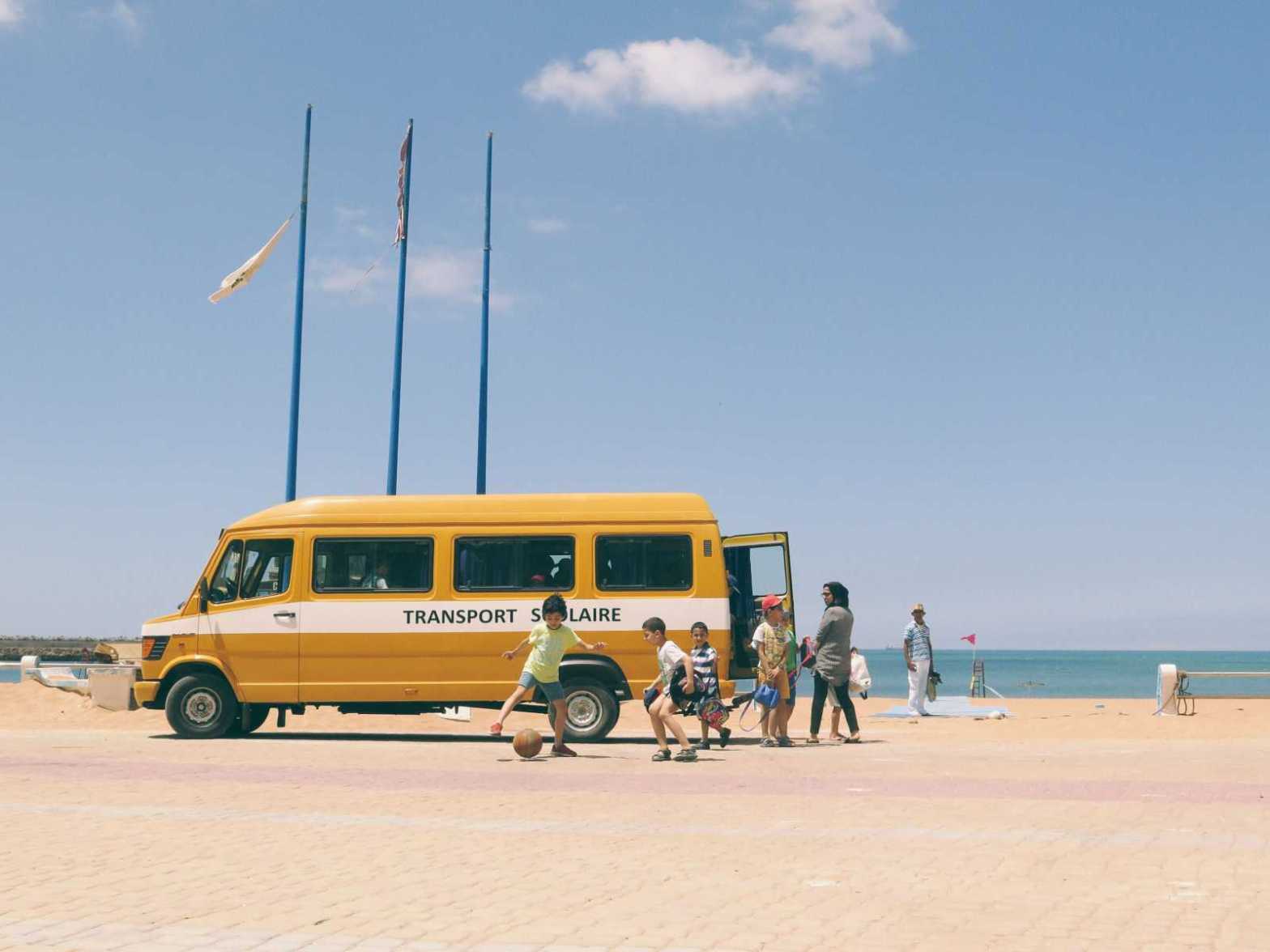
The focus of our last quarter has been working with local groups to improve bus networks. We believe that it is vital to provide transportation options for children living in rural areas. Thanks to our donors we were able to fund 50 buses and 200 cars that transport children to schools all around the globe.
This summer, because of the effort of our volunteers and the generous donations from our sponsors, we were able to deliver 10,000 pencils to children in need. We were able to reach the most unprivileged areas and provide local schools with this vital tool for education.



 Just Chill